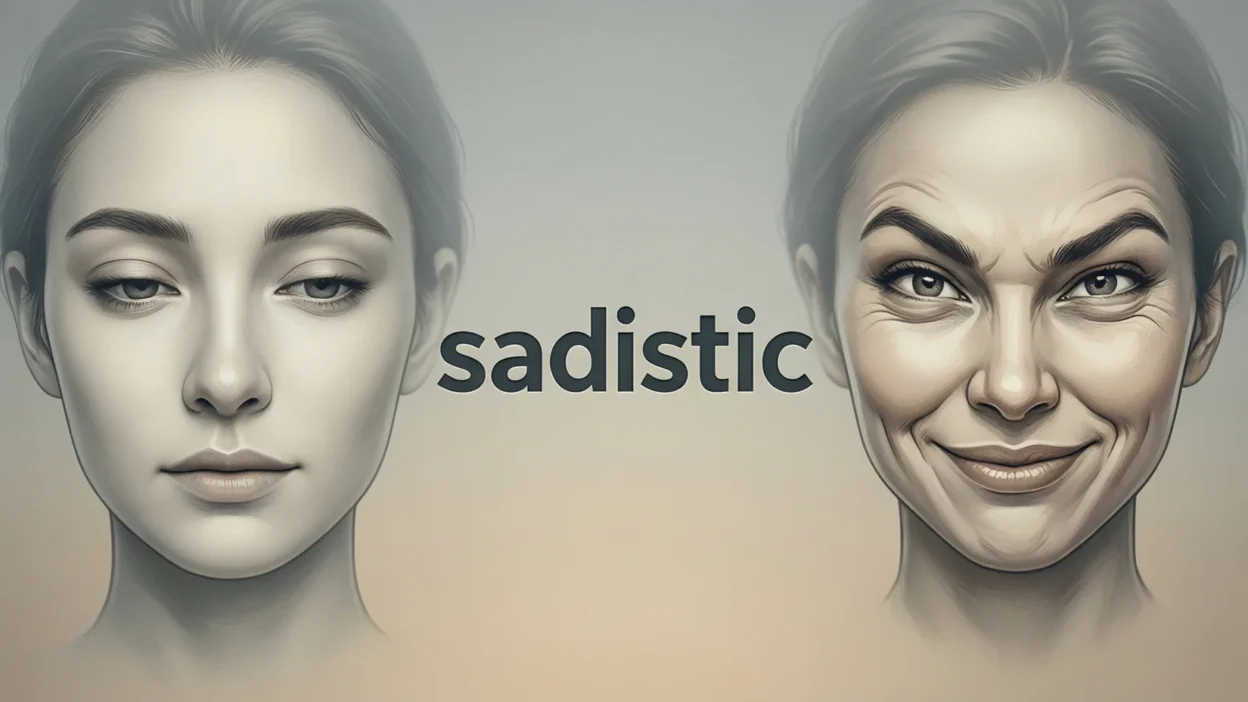
You might have heard someone say “that teacher is sadistic” or seen the word used in a movie review and felt unsure what it actually meant. I remember hearing it for the first time and wondering whether it was just another way to say rude or if it meant something deeper.
The word sounds intense and honestly it is. People often use it casually online but the real meaning is more psychological than most realize.
Quick Answer:
Sadistic means taking pleasure in causing pain discomfort or humiliation to others. It is usually used to describe cruel behavior or attitudes, either jokingly or seriously depending on the context.
What Does Sadistic Mean in Simple Terms?
Sadistic describes a person who enjoys seeing others suffer, whether physically or emotionally. The term comes from psychology but is now widely used in everyday language.
It does not always mean physical harm. It can also refer to:
- Enjoying emotional pain
- Finding pleasure in others frustration
- Taking satisfaction in punishment or control
Example:
“He smiled while making the task harder just to watch people struggle.”
In short:
Sadistic = enjoying someone else pain or discomfort
Where Is the Word Sadistic Commonly Used?
You will often see or hear the word sadistic in these places:
- 🧠 Psychology discussions
- 🎬 Movies and TV shows
- 📚 Books and novels
- 💬 Casual conversations
- 📱 Social media commentary
- 🎮 Gaming communities
Tone and usage:
- Can be serious or joking
- Not formal but accepted in writing
- Often used to criticize behavior
- Safe for general audiences
Examples of Sadistic in Conversation
A: “Why did he add extra homework before exams?”
B: “That’s sadistic honestly.”
A: “This game level is impossible.”
B: “The developer must be sadistic 😭”
A: “She enjoys embarrassing people publicly.”
B: “That sounds sadistic.”
A: “Why is the villain smiling while hurting others?”
B: “Because he’s sadistic.”
A: “This prank went too far.”
B: “Yeah it turned sadistic real quick.”
When to Use and When Not to Use Sadistic
✅ When to Use
- Describing cruel behavior
- Talking about villains or characters
- Criticizing harsh treatment
- Explaining psychology related topics
- Joking lightly about difficult situations
❌ When Not to Use
- In professional accusations
- To label real people seriously without proof
- In sensitive emotional situations
- When it could sound offensive or extreme
Context Comparison Table
| Context | Example Phrase | Why It Works |
|---|---|---|
| Casual Chat | “This exam felt sadistic” | Expresses frustration |
| Movie Review | “The villain is sadistic” | Accurate character description |
| Work Email | “The deadline is challenging” | More professional |
| Serious Conflict | Avoid labeling people | Prevents misunderstanding |
Similar Words or Alternatives to Sadistic
| Word | Meaning | When to Use |
|---|---|---|
| Cruel | Intentionally unkind | Everyday situations |
| Mean | Lacking kindness | Casual speech |
| Brutal | Extremely harsh | Describing actions |
| Heartless | No sympathy | Emotional context |
| Malicious | Harmful intent | Formal writing |
| Callous | Emotionally insensitive | Descriptive tone |
FAQs
1. Is sadistic always sexual?
No. Most modern usage refers to emotional or psychological cruelty.
2. Can sadistic be used jokingly?
Yes. Many people use it humorously to describe tough situations.
3. Is sadistic a medical term?
It originated in psychology but is now commonly used in everyday language.
4. Is calling someone sadistic offensive?
It can be. Use carefully depending on context.
5. What is the opposite of sadistic?
Compassionate or empathetic.
6. Can situations be sadistic or only people?
Both. People often describe tasks systems or games as sadistic.
Conclusion
Sadistic is a strong word that describes pleasure taken in others pain or discomfort. While it began as a psychological term, it is now widely used in movies conversations and online spaces. Sometimes it is said jokingly and sometimes it carries serious weight.
Understanding its meaning helps you use it correctly and avoid misunderstanding. When used thoughtfully, it can clearly express frustration or critique behavior without confusion.