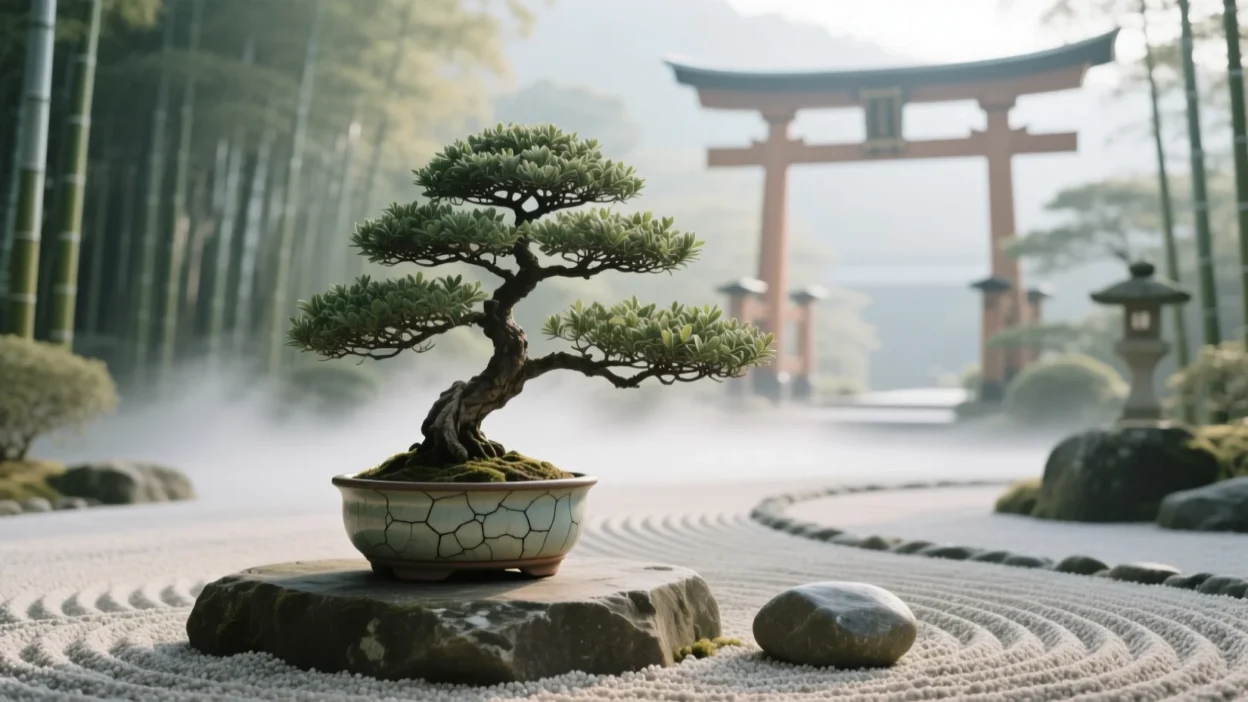
The first time I heard the word bonsai, I thought it simply meant a “small tree.” I remember seeing one on a windowsill perfectly shaped, calm, and somehow powerful despite its size. Like many people, I wondered: Is bonsai a type of tree? A plant species? Or just a decorative style? If you’ve ever had the same question, you’re in the right place.
Bonsai is one of those words that feels simple on the surface but carries centuries of meaning, culture, and philosophy behind it. People search for “what does bonsai mean” because they want more than a dictionary definition they want context, history, and clarity.
Quick Answer:
Bonsai is a Japanese term that means “planted in a container.” It refers to the art of growing and shaping miniature trees to resemble full-sized trees found in nature.
What Does Bonsai Mean in Simple Words?
The word bonsai comes from two Japanese characters:
- Bon (盆) → tray or shallow container
- Sai (栽) → plant or planting
Together, bonsai literally means “a tree planted in a tray.”
But bonsai is not just a small plant or a dwarf tree. It is a living art form that involves carefully shaping, pruning, and training a real tree so that it looks like a mature tree — just on a smaller scale.
In simple terms:
- A bonsai is not genetically small
- It is not artificial
- It is not a houseplant by default
It is a normal tree, grown in a controlled way to express balance, age, and harmony.
In short:
Bonsai = container-grown tree + artistic shaping + patience + care
The True Meaning of Bonsai (Beyond the Dictionary)
While the literal meaning explains the word, the true meaning of bonsai goes much deeper.
Bonsai represents:
- Patience
- Balance
- Harmony with nature
- Respect for time
- Mindful care
In traditional Japanese culture, bonsai is connected to Zen philosophy. The goal is not to dominate nature, but to cooperate with it — guiding growth rather than forcing it.
A well-grown bonsai often looks:
- Old, even if it’s young
- Strong, even if it’s small
- Calm, even if it’s detailed
This is why many people describe bonsai as meditative rather than decorative.
Where Does Bonsai Come From? (History Explained Simply)
Although bonsai is strongly associated with Japan, its origins actually trace back to ancient China.
Early Roots in China
- Around 1,000+ years ago, Chinese monks practiced penjing
- Penjing involved growing miniature landscapes in containers
- These included trees, rocks, and symbolic scenery
Bonsai in Japan
- Japanese monks later adopted the practice
- Over time, Japan refined it into what we now call bonsai
- The Japanese style focused more on:
- Single trees
- Simplicity
- Natural form
By the 19th century, bonsai had become a respected art form in Japan and eventually spread worldwide.
Is Bonsai a Tree or a Plant?
This is one of the most common questions.
Bonsai is a tree.
It can be:
- A pine tree
- A maple tree
- A juniper
- A ficus
- A cherry tree
The key difference is how it’s grown, not what it is.
A bonsai tree:
- Grows in a shallow pot
- Has its roots pruned
- Is shaped with wiring and trimming
- Grows slowly due to controlled conditions
But biologically, it is the same species as a full-sized tree.
Common Misconceptions About Bonsai
Let’s clear up some myths.
Myth 1: Bonsai trees are genetically small
❌ False they are normal trees.
Myth 2: Bonsai is cruel to plants
❌ False when done correctly, bonsai trees can live for decades or even centuries.
Myth 3: Bonsai is only for experts
❌ False beginners can start with easy species.
Myth 4: Bonsai is an indoor plant
❌ False many bonsai trees must live outdoors.
Where Is the Word “Bonsai” Commonly Used Today?
Today, the word bonsai appears in many contexts:
- 🌱 Gardening and horticulture
- 🏡 Home décor
- 🧘 Mindfulness and meditation
- 🎨 Art and design
- 📚 Education and culture
- 🌍 Metaphors for minimalism
You might hear bonsai used metaphorically, such as:
- “A bonsai version of a company” (small but refined)
- “Bonsai mindset” (focused, intentional growth)
Examples of How the Word “Bonsai” Is Used
Sentence examples:
- “She grows bonsai as a way to relax.”
- “That bonsai tree is over 40 years old.”
- “Bonsai teaches patience and discipline.”
- “This garden features traditional Japanese bonsai.”
- “He’s learning bonsai pruning techniques.”
When to Use and When Not to Use the Word Bonsai
✅ When to Use
- Talking about miniature trees
- Discussing Japanese culture
- Gardening or plant care topics
- Metaphors for controlled growth
- Art and design conversations
❌ When Not to Use
- To describe fake plants
- As a synonym for “small” without context
- When referring to unrelated décor
- To describe any random potted plant
Context Comparison Table
| Context | Correct Usage | Why It Works |
|---|---|---|
| Gardening | “This bonsai needs pruning.” | Accurate and specific |
| Culture | “Bonsai is a Japanese art form.” | Educational |
| Metaphor | “A bonsai version of the idea.” | Symbolic use |
| Incorrect | “That tiny plant is a bonsai.” | Not all small plants are bonsai |
Types of Bonsai (Quick Overview)
Some popular bonsai tree types include:
- Juniper bonsai
- Pine bonsai
- Maple bonsai
- Ficus bonsai
- Cherry blossom bonsai
- Elm bonsai
Each type has different care needs, growth patterns, and symbolism.
Symbolic Meaning of Bonsai
Bonsai often symbolizes:
- Harmony between humans and nature
- Strength within limitation
- Longevity
- Balance and peace
- Intentional living
In gifts, bonsai can represent:
- Respect
- Good luck
- Patience
- Long life
FAQs
1. What does bonsai literally mean?
It means “planted in a container.”
2. Is bonsai Japanese or Chinese?
It originated in China but was refined in Japan.
3. Are bonsai trees real trees?
Yes, they are real, living trees.
4. Is bonsai hard to maintain?
Some types are beginner-friendly; others require experience.
5. Can bonsai live indoors?
Some can, but many must live outdoors.
6. How long can a bonsai tree live?
With proper care, decades some over 100 years.
7. Does bonsai have a spiritual meaning?
Yes, it’s deeply connected to mindfulness and balance.
Conclusion
So, what does bonsai really mean? At its core, bonsai is far more than a small tree in a pot. It is a living expression of patience, discipline, and harmony with nature. The word itself means “planted in a container,” but the practice represents intentional growth, balance, and respect for time.
Whether you’re interested in bonsai as an art form, a hobby, or a symbol of mindful living, understanding its true meaning helps you appreciate why this ancient practice continues to inspire people around the world today.