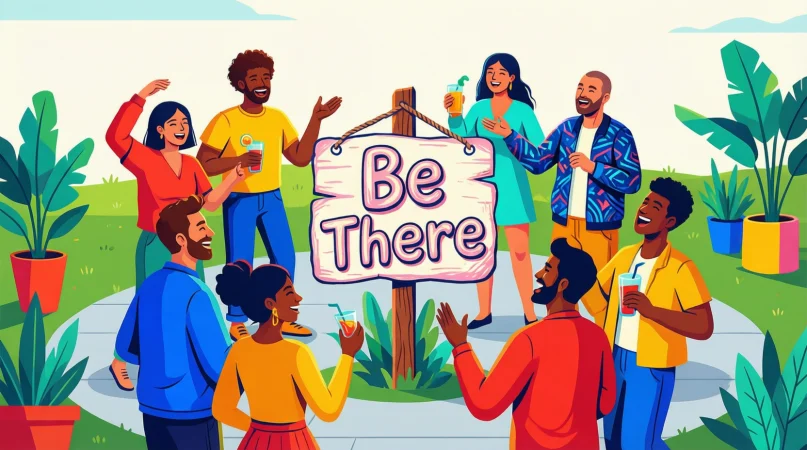
Have you ever been invited somewhere and the message ended with “be there or be square” and you paused thinking… am I missing something here? The first time I saw this phrase, I remember wondering why not showing up suddenly made me a shape.
😄If you have ever felt the same confusion, you are definitely not alone. This expression has been around for decades, yet it still pops up in modern texts, group chats, and casual invites.
Quick Answer:
“Be there or be square” means you should attend or show up, otherwise you will miss out. It is a friendly, casual, and playful phrase often used to encourage someone to come to an event.
What Does “Be There or Be Square” Mean in Text?
In texting and everyday conversation, “be there or be square” is a lighthearted way of saying you are expected to come. If you do not show up, you are jokingly labeled as “square,” which traditionally means boring or not fun.
It is not an insult. Instead, it is a playful push meant to create excitement or urgency.
Example:
“Party starts at 8. Be there or be square 😄”
In short:
Be there or be square = come join us = friendly encouragement
Where Is “Be There or Be Square” Commonly Used?
This phrase is commonly used in relaxed and social environments such as:
- Group chats with friends 📱
- Text invitations 📨
- Social media captions
- School or college plans
- Casual workplace chats
- Event reminders
Tone:
- Friendly
- Casual
- Playful
- Not formal
- Social friendly
It works best when the goal is to motivate someone to attend without sounding strict.
Examples of “Be There or Be Square” in Conversation
A: movie night at my place tonight
B: say less. what time
A: 9 sharp. be there or be square 😄
A: we meeting at the cafe tomorrow
B: i might be late
A: nah be there or be square 😂
A: game night friday
B: sounds fun
A: be there or be square 🎮
A: reunion at 6 pm
B: is it mandatory
A: not mandatory but be there or be square 😅
A: birthday dinner tomorrow
B: got it
A: cool. be there or be square 🎉
When to Use and When Not to Use “Be There or Be Square”
Use
- Inviting friends
- Casual plans
- Light reminders
- Fun events
- Informal workplace chats
- Friendly nudges
Not Use
- Serious meetings
- Formal emails
- Professional notices
- Emergency situations
- Legal or official communication
Context Comparison Table
| Context | Example Phrase | Why It Works |
|---|---|---|
| Friend Chat | “be there or be square 😄” | Friendly and motivating |
| Group Text | “see you at 7. be there or be square” | Casual and playful |
| Work Email | “please attend the meeting at 10” | Clear and professional |
| Formal Invite | “your presence is requested” | Polite and formal |
Similar Phrases or Alternatives
| Phrase | Meaning | When to Use |
|---|---|---|
| “Do not miss it” | Strong encouragement | Events and reminders |
| “See you there” | Friendly confirmation | Casual plans |
| “Come through” | Show up | Informal chats |
| “You should come” | Polite invite | Mixed settings |
| “Do not be late” | Time focused reminder | Semi formal |
| “Join us” | Invitation | All casual settings |
FAQs
1. Is “be there or be square” rude?
No. It is playful and friendly, not rude.
2. Does it mean something negative?
No. It just encourages attendance in a fun way.
3. Can I use it with coworkers?
Yes, but only in informal workplace chats.
4. Is it outdated slang?
It is an older phrase, but still widely understood today.
5. Can it be used in text messages?
Yes. It is very common in texting.
6. Is “square” an insult here?
No. It is a joking expression, not serious.
7. Can it be used for invitations?
Yes. It works perfectly for casual invites.
Conclusion
“Be there or be square” is a classic expression that has stood the test of time because of its friendly and motivating tone. It makes invitations sound more fun and adds personality to everyday messages.
While it is not suitable for formal communication, it works perfectly in casual plans, texts, and social invites. Now that you know exactly what it means, you can confidently use it to invite others without sounding boring or too serious.