Noticing a painful bump on your skin can be worrying, especially if it looks red, swollen, or filled with fluid. Many people search for this topic after spotting something unusual and wondering whether it is serious. I have seen many people confuse boils with pimples, cysts, or insect bites, which often leads to unnecessary stress.
Understanding what a boil actually looks like can help you decide when simple care is enough and when medical advice is needed.
Quick Answer:
A boil is a red, swollen, painful lump on the skin that usually fills with pus over time. It often starts small and grows before healing or draining.
What Does a Boil Look Like on the Skin?
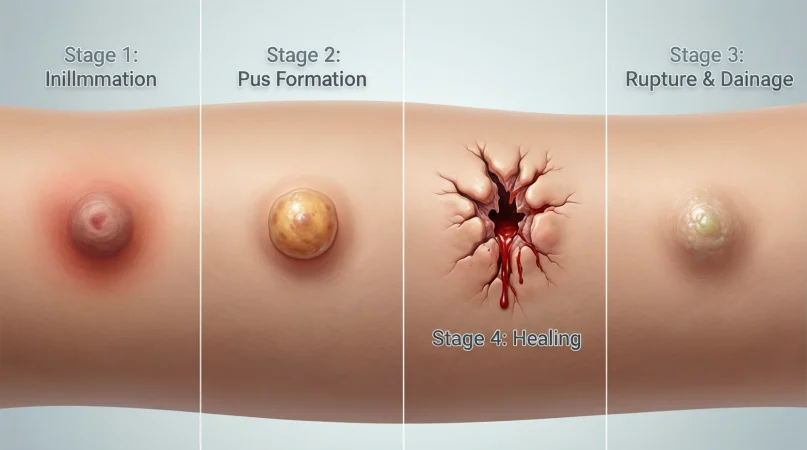
A boil usually begins as a firm red bump that feels tender when touched. Over a few days, it becomes larger and softer as pus collects underneath the skin.
Common visual signs include:
- Red or pink raised lump
- Swollen area around the bump
- Yellow or white center as pus forms
- Shiny or stretched skin surface
- Pain or warmth in the area
As the boil matures, it may develop a visible head and eventually drain on its own.
Example:
“I noticed a red painful bump on my thigh that slowly turned white in the center. My doctor said it was a boil.”
In short:
Boil = red swollen bump + pus filled center + tenderness
Where on the Body Do Boils Commonly Appear?
Boils tend to appear in areas where sweat, friction, or hair follicles are common:
- Face and neck
- Armpits
- Thighs
- Buttocks
- Shoulders
- Areas under tight clothing
They can affect people of all ages and skin types.
General characteristics:
- Usually painful
- Can be single or multiple
- Often caused by bacteria
- More common with sweating or skin irritation
Examples of How People Describe a Boil
A: “This bump hurts way more than a pimple.”
B: “It might be a boil if it feels warm and swollen.”
A: “It started small but keeps getting bigger.”
B: “That sounds like a boil forming.”
A: “There is a white spot in the middle now.”
B: “That usually means it is filled with pus.”
A: “Should I pop it?”
B: “No, boils should not be squeezed.”
A: “It looks angry and red.”
B: “Boils often look inflamed like that.”
When to Be Concerned About a Boil
✅ When Home Care May Be Enough
- Small boil
- Mild pain
- No fever
- Slowly improving
- Drains naturally
❌ When to See a Doctor
- Severe pain or swelling
- Fever or chills
- Boil on the face or spine
- Multiple boils appearing together
- No improvement after several days
- Boil keeps coming back
Context Comparison Table
| Skin Issue | Appearance | Key Difference |
|---|---|---|
| Boil | Red swollen pus filled lump | Painful and deep |
| Pimple | Small surface bump | Less painful |
| Cyst | Firm round lump | Usually painless |
| Insect bite | Red itchy bump | Often itchy not pus filled |
Similar Skin Conditions Often Confused With Boils
| Condition | What It Looks Like | How It Differs |
|---|---|---|
| Acne | Small pimples or whiteheads | Less swollen |
| Abscess | Large pus pocket | Often deeper and larger |
| Ingrown hair | Red bump with hair | Smaller and localized |
| Folliculitis | Tiny red spots | Multiple small bumps |
| Skin cyst | Smooth lump | Slow growing |
FAQs
1. What color is a boil?
Most boils are red or pink and may turn yellow or white in the center.
2. Does a boil always have pus?
Yes, boils usually fill with pus as they develop.
3. Is a boil hard or soft?
Early boils feel hard. Mature boils feel softer due to pus.
4. Can a boil look like a pimple?
At first yes, but boils are usually larger and more painful.
5. Should a boil be popped?
No. Squeezing can spread infection and worsen healing.
6. How long does a boil last?
Most boils heal within one to three weeks.
7. Are boils contagious?
The bacteria can spread through skin contact, but boils themselves are not directly contagious.
Conclusion
A boil may look alarming, but understanding its appearance can help reduce anxiety and prevent complications. Typically, a boil appears as a red, swollen, painful lump that gradually fills with pus before healing. While many boils resolve with simple care, some require medical attention.
Paying attention to size, pain level, and location helps you decide the next steps. When in doubt, seeking advice from a healthcare professional is always the safest choice.